

 Schedule a Site Visit
How Downspout Placement Affects Drainage
- Details
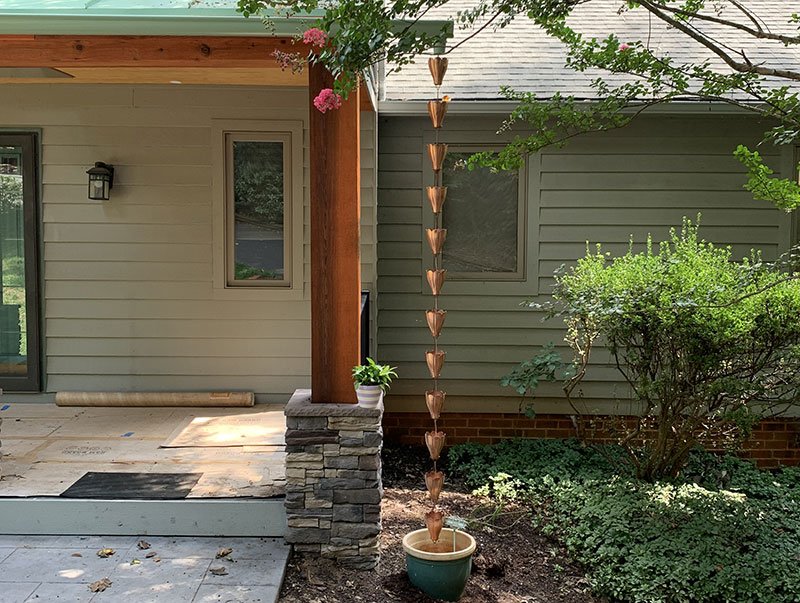
Your home's drainage system depends on more than gutters along the roofline. Downspout positioning determines how effectively water moves away from your roof, walls, and foundation. Poor downspout placement is one of the most common and overlooked causes of water damage, and many homeowners don't realize the problem until pooling water, foundation cracks, or landscape erosion force expensive repairs.
The Importance of Downspout Placement
Gutters collect the water running off your roof, while downspouts carry it safely away from your foundation. When they're spaced too far apart, poorly positioned, or discharging too close to the house, that entire system breaks down. Even one misplaced downspout can dump hundreds of gallons near your home during a heavy storm, threatening your foundation and landscaping.
The general rule is that one downspout should serve no more than 30 to 40 linear feet of gutter, and if downspouts are not connected to underground drainage pipes, the water coming out of them needs to discharge at least 5 feet away from your house's foundation. Homes with steep roof pitches or large roof surface areas may need downspouts placed more frequently because water volume increases with both slope and square footage. When a gutter section is too long without a downspout, water overflows at the midpoint or backs up under the roofline, which can damage fascia boards and soffit materials over time.
Common Downspout Placement Mistakes
Some drainage problems trace back to decisions made during the original gutter installation or a renovation that changed the roofline without updating the drainage plan. Recognizing these mistakes early helps prevent long-term structural damage.
- Downspouts that discharge directly against the foundation instead of routing water at least four to six feet away from the home
- Placing all downspouts on one side of the house while the opposite side has long, unsupported gutter runs
- Routing downspouts into areas with poor grading where water collects rather than flowing away from the structure
- Connecting multiple gutter sections into a single downspout that cannot handle the combined water volume during heavy rain
Even homes with properly installed asphalt shingle roofing or standing seam metal roofing can develop serious water intrusion issues if the downspouts below are incorrectly placed. The roofing material protects the surface, but the drainage system protects everything underneath.
How Proper Placement Protects Your Foundation
Water that pools near your foundation creates hydrostatic pressure against basement walls, which can lead to cracks, seepage, and in severe cases, structural shifting. Downspouts should always direct water toward a slope that carries it away from the home. If your yard doesn't have a natural grade that supports this, buried drain lines or splash block extensions can redirect the flow.
Corner downspouts deserve special attention because they handle water from two converging gutter runs. These locations often receive the highest water volume, and undersized downspouts at corners are a frequent cause of overflow. A roofing contractor experienced with drainage systems will evaluate these high-volume points and recommend appropriately sized downspouts, typically 3x4 inches rather than the standard 2x3 inches for residential applications.
Signs Your Downspouts Need to Be Repositioned
Homeowners don't always know their downspout placement is a problem until damage becomes visible. Several warning signs suggest your current configuration isn't working.
- Soil erosion or mulch displacement directly below downspout outlets
- Water stains or mildew forming on the foundation wall near a downspout
- Puddles that remain near the house for hours after rain stops
- Basement dampness or musty odors that worsen after storms
- Ice dams forming at gutter edges during winter months
If you notice any of these signs, schedule an inspection before the problem worsens. Gutter cleaning alone won't solve a placement issue, though keeping gutters clear of debris is still essential to ensure water reaches the downspouts. Clogged gutters force water to overflow at random points along the roofline, bypassing the downspouts entirely and creating unpredictable drainage patterns around your home.
The Role of Roof Design in Drainage Planning
Your roof's design directly affects where downspouts should be placed. A simple gable roof has two main drainage planes, making downspout placement relatively straightforward. Complex rooflines with multiple valleys, dormers, and intersecting planes create concentrated water flow points that require careful downspout positioning to handle the volume.
Roof valleys channel water from two converging planes into a single stream, and the gutter section receiving that stream needs a nearby downspout to handle the surge. When homeowners add onto their homes or change the roofline during a renovation, the existing gutter and downspout layout often becomes inadequate for the new water flow patterns. A professional assessment after any roofing installation or structural change ensures the drainage system matches the updated roof geometry.
When to Call a Professional for a Drainage Assessment
Some downspout adjustments are simple enough, like adding an extension to direct water farther from the foundation. Repositioning downspouts, adding new ones, or rerouting underground drain lines requires professional evaluation. A contractor will assess your roof's square footage, pitch, and layout alongside your property's grading to determine the right number, size, and placement of downspouts for your specific home.
Addressing downspout placement before problems escalate protects your roof, foundation, and landscaping from preventable water damage. A well-planned drainage system works quietly in the background, keeping water moving where it should go and away from where it shouldn't.
Trusted Roofing and Drainage Services in Central Virginia
Blue Ridge Roofing, Inc. has been helping homeowners protect their properties since 1987. Our roofing services include full drainage assessments, gutter system installation, and downspout repositioning to ensure your home handles water effectively through every season. Whether you need a new gutter system, roofing repair, or a complete drainage evaluation, our experienced team manages every project with a dedicated site manager and a thorough process from start to finish.
Call us at (434) 979-0501 or schedule a site visit to discuss your home's drainage needs. Blue Ridge Roofing is here to help you make informed decisions about protecting your home.